Ohio State nav bar

Skip to main content

The Ohio State University

  • Help
  • BuckeyeLink
  • Map
  • Find People
  • Webmail
  • Search Ohio State
Wu Group
Inorganic and Materials Chemistry
  • The Wu Group Home
  • Publications
  • Research Areas
    • Batteries
    • Organic-inorganic Metal Halides
    • Quantum Spin Liquids
  • People
  • News
  • Group Files

Day: May 8, 2023

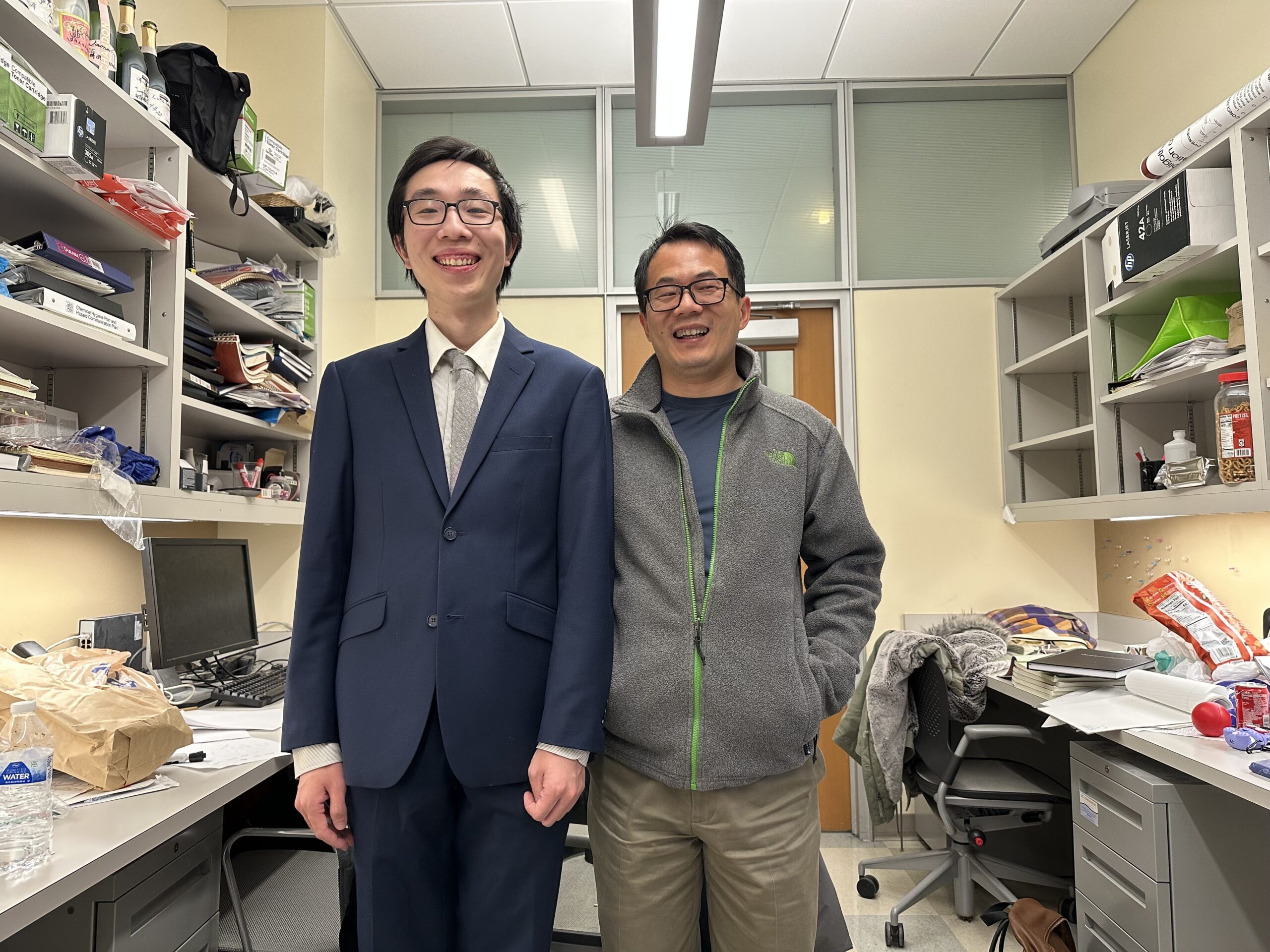
Songwei passed his Ph.D. defense! Congratulations, Dr. Zhang!

May 8, 2023August 7, 2023
by Ruiyang Lyu at 9:40amAugust 7, 2023

Posted in Uncategorized

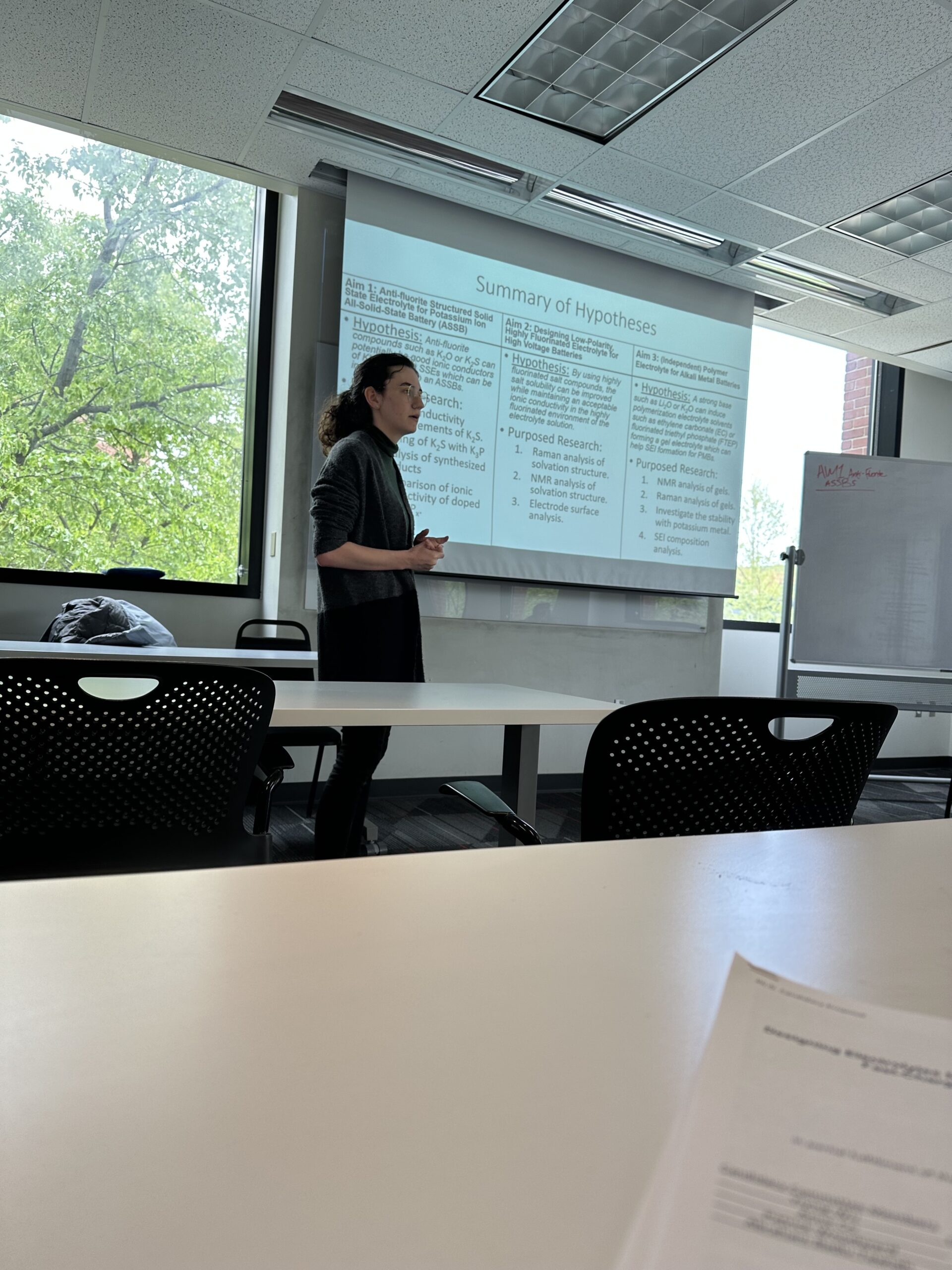
Jocelyn passed her candidacy exam! Congrats!

May 8, 2023
by Ruiyang Lyu at 9:36am

Posted in Uncategorized
May 2023
S M T W T F S
 123456
78910111213
14151617181920
21222324252627
28293031  
« Apr   Jul »

Archives

Recent Posts

  • Jocelyn gets the University wide Excellence in Safety Award 2025! Congrats!! September 17, 2025
  • Ruichen passed his PhD defense. Congratulations Dr. Wan! August 25, 2025
  • Congratulations to Yiying on being selected as College of Arts and Sciences Distinguished Professor! March 31, 2025
  • Wu lab on the 2025 Dean’s list March 28, 2025
  • Welcome Doris, Alina, and Drew to Wu Group! December 4, 2024

RSS Nature Chemistry

  • Organocatalytic enantioselective synthesis of S(IV)-stereogenic sulfinamides enabled by an air-stable chiral phosphine
  • A natural neurotransmitter with negative consequences
  • A seminar story
  • Photocatalytic synthesis of organoarsenicals directly from minerals
  • Collective synthesis of 1,2,4-trisubstituted, <i>meta</i>- and <i>ortho</i>-substituted arene bioisosteres from bicyclobutanes
  • Quantum interference between direct and indirect reaction paths in the photodissociation of HOD
  • Mineral-to-molecule arsenic transfer via photoredox catalysis
  • Carbonate’s radical role in competitive electroreduction reactions

RSS Nature Materials

  • Prediction of rheological properties via structure elucidation of solvated hydrogels
  • Two-dimensional crystalline hard masks for high-aspect-ratio nanofabrication
  • Stress-relaxing granular bioprinting materials enable complex and uniform organoid self-organization
  • Unravel the complexity
  • Quantum control of Hubbard excitons
  • Proton shuttle-assisted triplet energy transfer
  • An iontronic reservoir for highly robust neuromorphic prosthesis
  • Room-temperature two-dimensional multiferroic metal with voltage-controllable magnetic order

RSS Nature Energy

  • Sorption-driven dissolution refrigeration cycle with thermal storage
  • Reversible solutions
  • Challenges, technological pathways and trade-offs of perovskite solar modules for long-term operation
  • Solvent intercalation in layered cathodes for ultrafast sodium-ion batteries
  • Heterogeneity in public attitudes and preferences for the deployment of aquifer thermal energy storage
  • Letting ions slide
  • Solvent-enabled fast kinetics
  • Mapping innovation priorities for rapid green power growth towards 2030

RSS Nature

  • Ultra-bright supernova wobbles like a spinning top
  • How an all-female fish species defies evolutionary expectations
  • A mechanism to initiate emergency type 2 myelopoiesis
  • China pledges billion-dollar spending boost for science
  • Gut microbes affect cognition during ageing
  • Risk-adaptive therapy guided by dynamic ctDNA in nasopharyngeal carcinoma
  • Structures of Marburgvirus glycoprotein and its complex with NPC1 receptor
  • National statistics are in crisis around the world — and the impacts will be severe
  • Capturing dynamic phage–pathogen coevolution by clinical surveillance
  • Multidimensional profiling of heterogeneity in supratentorial ependymomas
  • A large-scale coherent 4D imaging sensor
  • The dynamic basis of G-protein recognition and activation by a GPCR
  • This fish shouldn’t exist — the weird genetics of clonal vertebrates
  • Physics at risk: UK science leader on what's wrong with the latest funding cuts
  • Multimodal electron microscopy of halide perovskite interfacial dynamics
  • A silicon chip that enables the creation of 4D cameras
  • Lense–Thirring precessing magnetar engine drives a superluminous supernova
  • This supernova is too bright – now astronomers might know why
  • Facile induction of immune tolerance by an interleukin-2–TGFβ surrogate agonist
  • Scientists revive activity in frozen mouse brains for the first time

RSS Unknown Feed

Social Media Links

    If you have trouble accessing this page and need to request an alternate format, contact u@osu.edu

    The content of this site is published by the site owner(s) and is not a statement of advice, opinion, or information pertaining to The Ohio State University. Neither text, nor links to other websites, is reviewed or endorsed by The Ohio State University.

    Log in