Ohio State nav bar

Skip to main content

The Ohio State University

  • Help
  • BuckeyeLink
  • Map
  • Find People
  • Webmail
  • Search Ohio State
Wu Group
Inorganic and Materials Chemistry
  • The Wu Group Home
  • Publications
  • Research Areas
    • Batteries
    • Organic-inorganic Metal Halides
    • Quantum Spin Liquids
  • People
  • News
  • Group Files

Author: Ruiyang Lyu

Songwei’s manuscript about thin film CPL of a chiral MOF was accepted by Chemical Communication, congratulations!

October 4, 2023
by Ruiyang Lyu at 11:31am
Posted in Uncategorized

Jieren’s paper about K-O2 battery solid state electrolyte is accepted by Advanced Materials, congratulations!

September 8, 2023
by Ruiyang Lyu at 12:55pm
Posted in Uncategorized

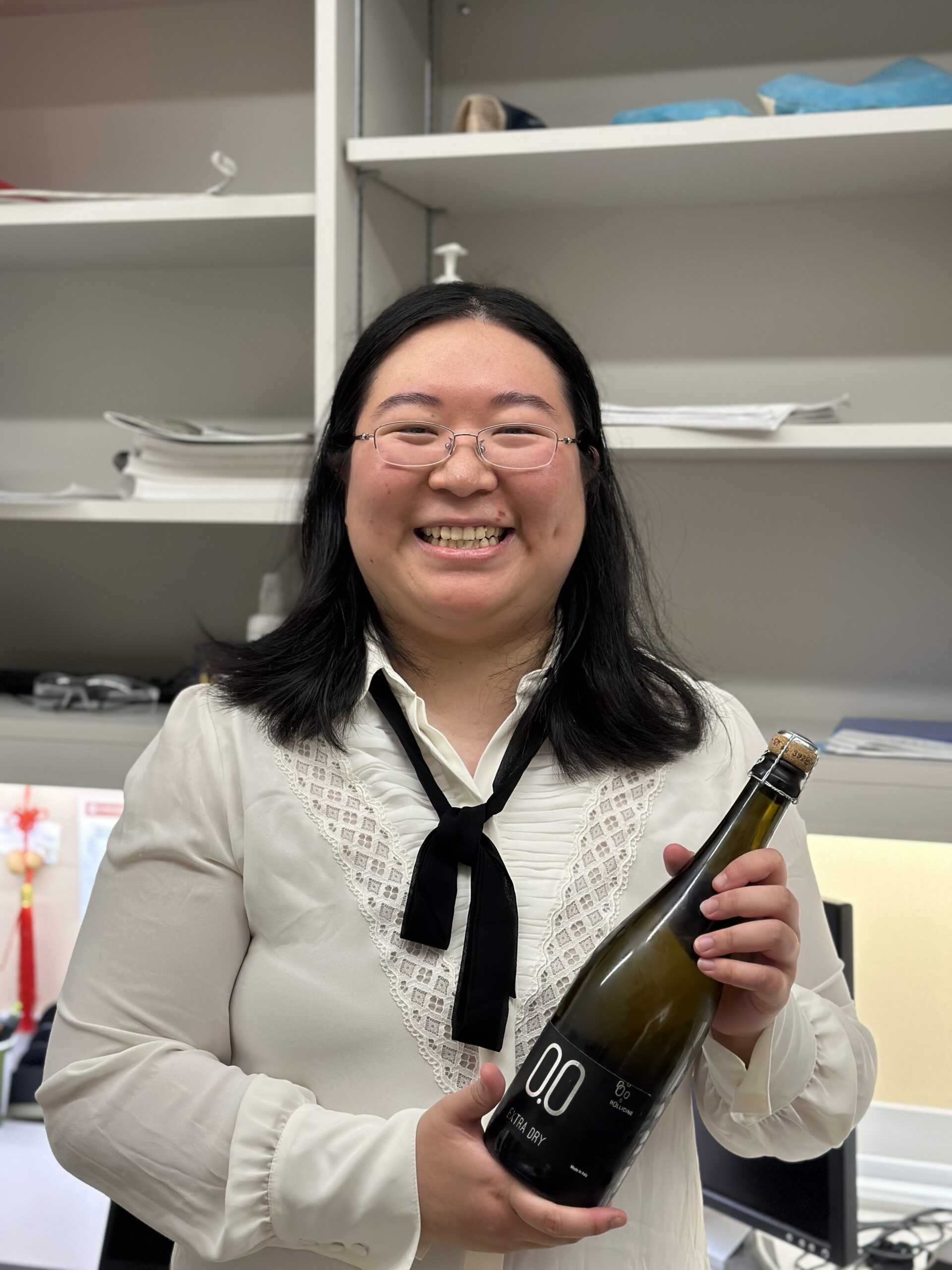
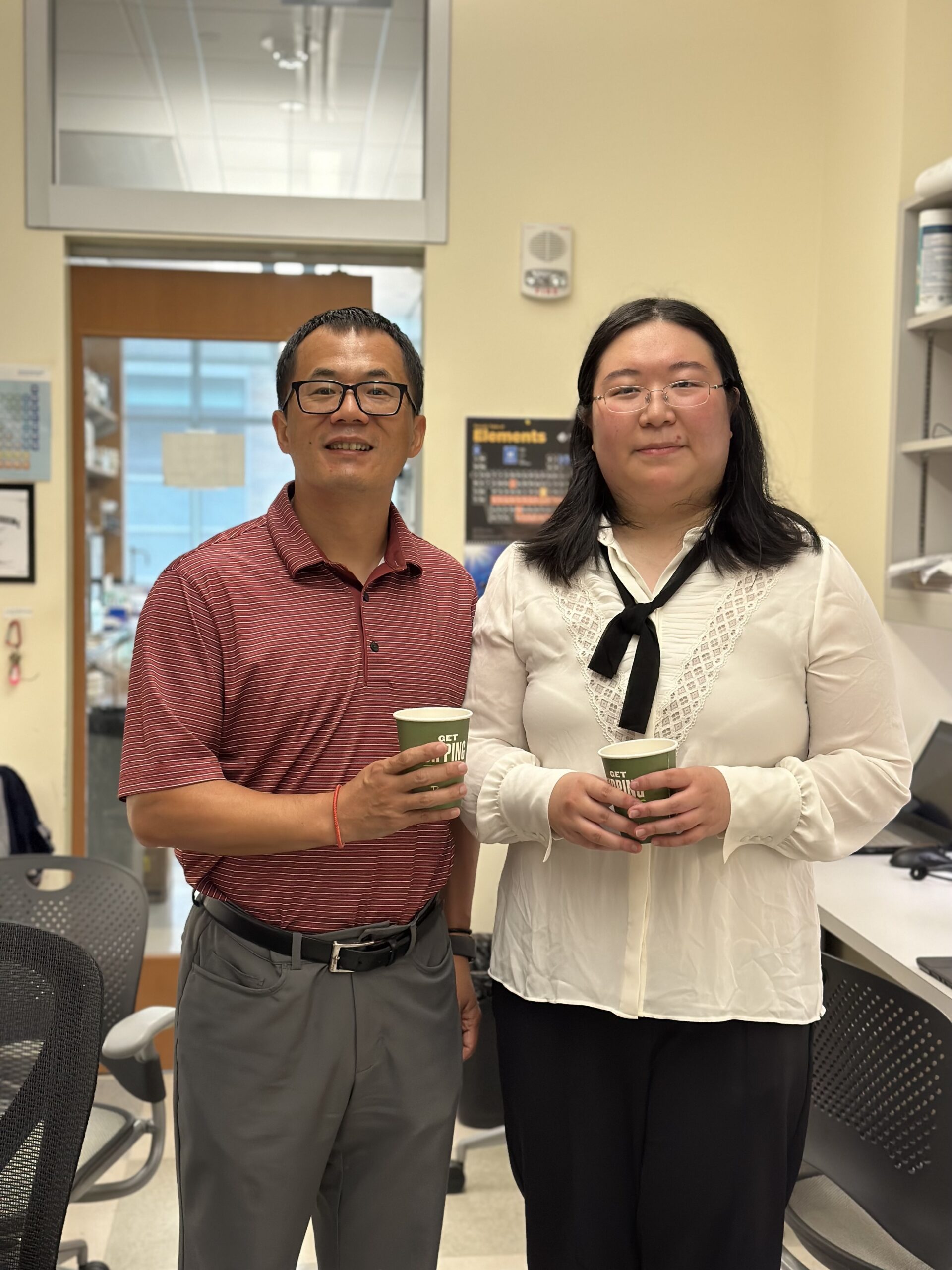
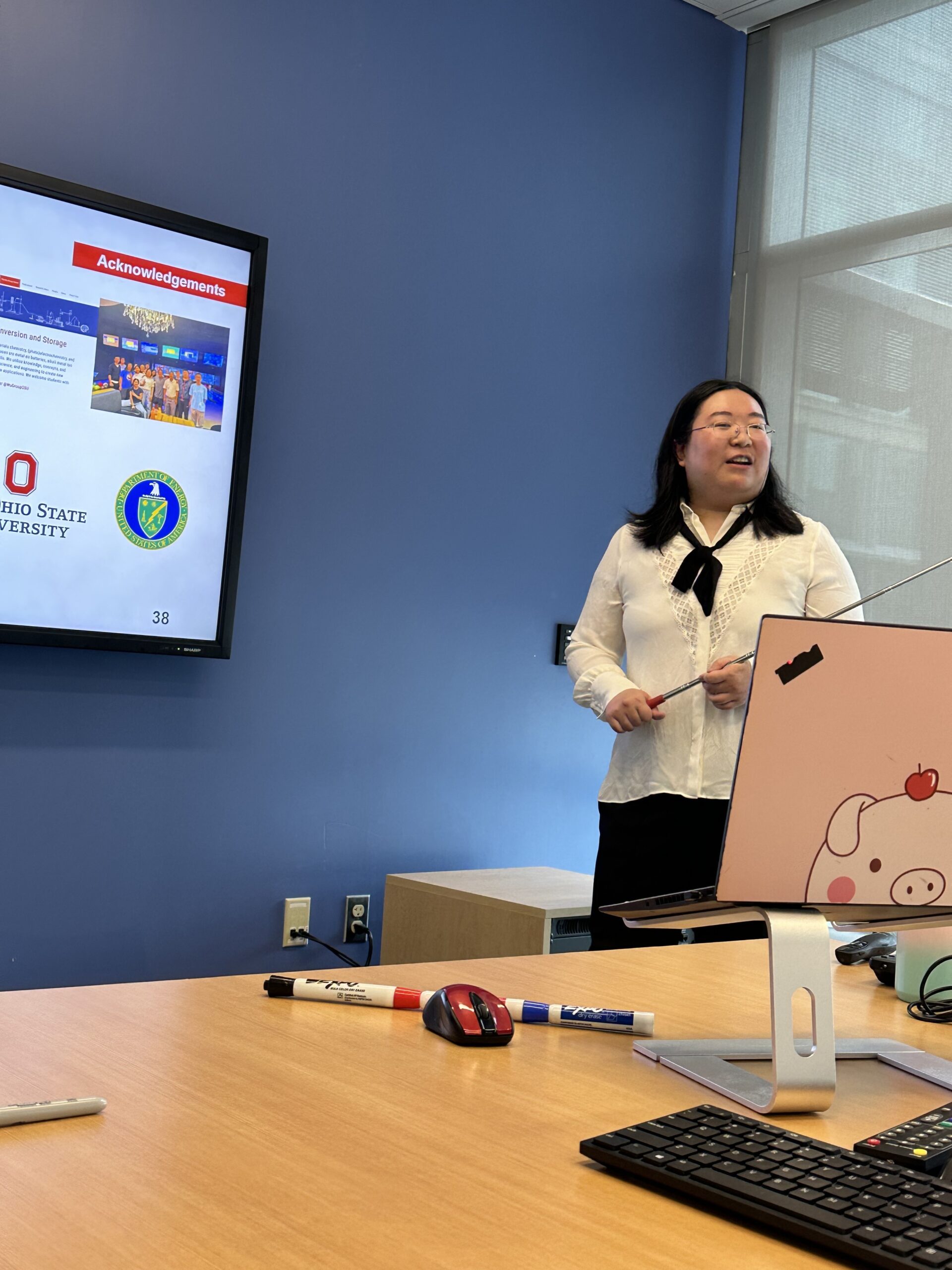
Jieren passed her Ph.D. defense! Congratulations, Dr. Shao!
August 7, 2023October 4, 2023
by Ruiyang Lyu at 3:47pmOctober 4, 2023

Posted in Uncategorized

Ruiyang’s manuscript about PEC of methylviologen lead iodide is accepted by J. Phys. Chem. C. Congratulations!

July 19, 2023September 8, 2023
by Ruiyang Lyu at 5:48pmSeptember 8, 2023
Posted in Uncategorized

Lei and Huiling’s paper about two-electron redox in K-O2 batteries is published on Faraday Discussions. Congratulations!

July 19, 2023July 19, 2023
by Ruiyang Lyu at 5:46pmJuly 19, 2023
Posted in Uncategorized

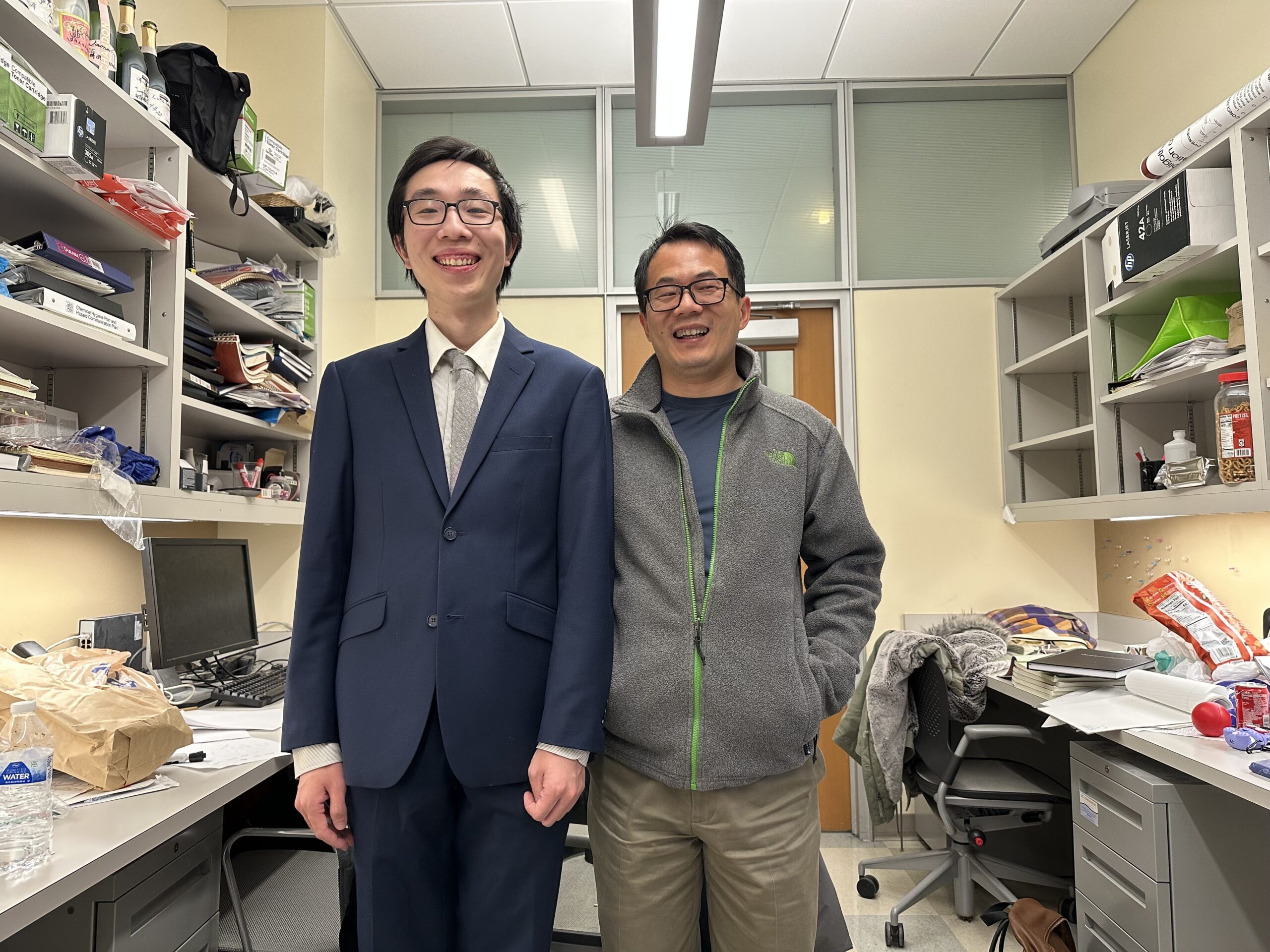
Songwei passed his Ph.D. defense! Congratulations, Dr. Zhang!

May 8, 2023August 7, 2023
by Ruiyang Lyu at 9:40amAugust 7, 2023

Posted in Uncategorized

Jocelyn passed her candidacy exam! Congrats!
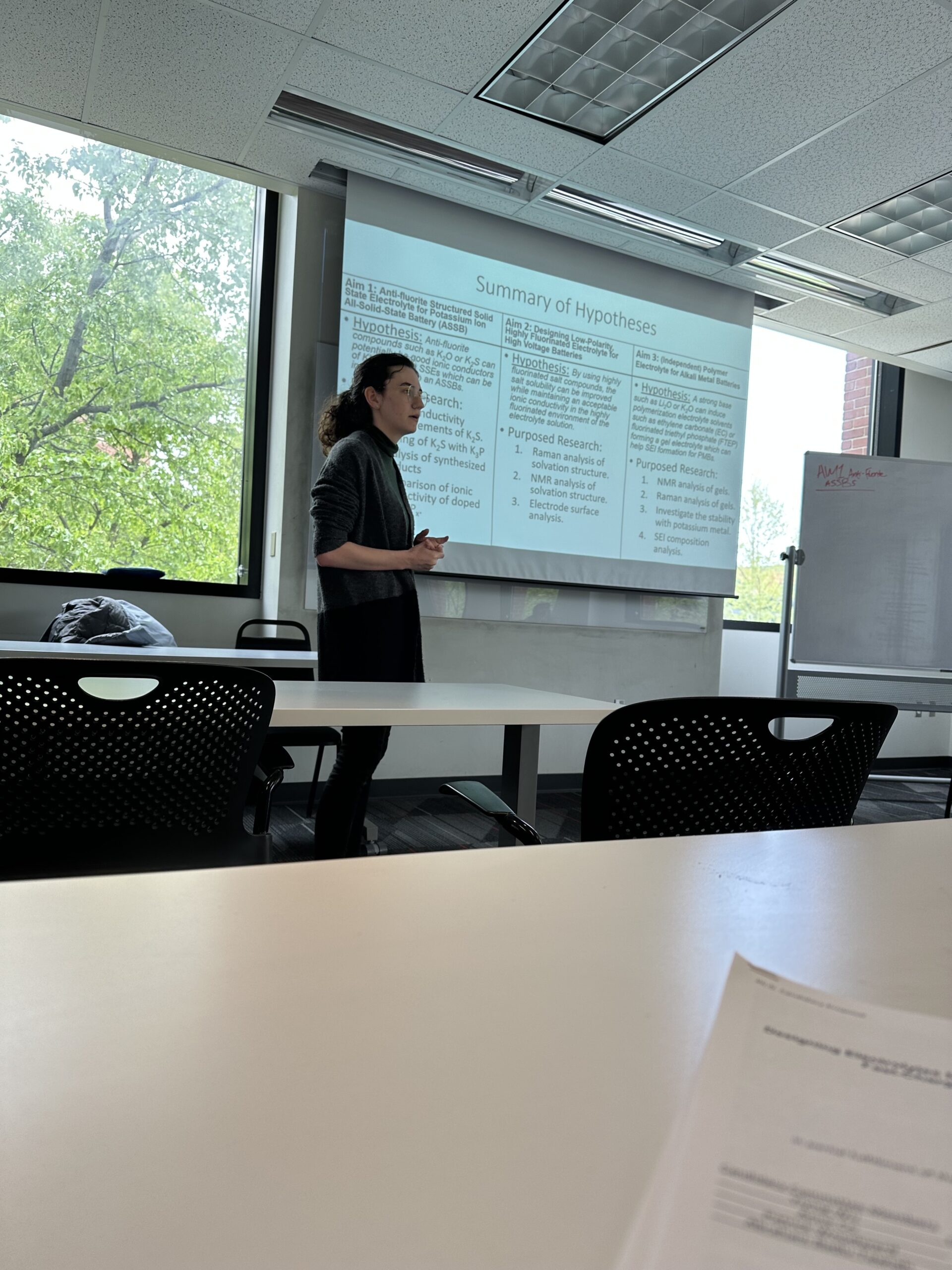
May 8, 2023
by Ruiyang Lyu at 9:36am

Posted in Uncategorized

Ruichen’s manuscript about organic secondary structures inside hybrid lead iodides is accepted by J. Phys. Chem. C. Congrats!

April 20, 2023July 19, 2023
by Ruiyang Lyu at 10:39amJuly 19, 2023

Ruichen’s manuscript on impact of organic cation secondary structure inside hybrid organic lead iodides is accepted by J. Phys. Chem. C. Congrats, Ruichen!

Posted in Uncategorized

Welcome Chenhao Dang and Smrutimedha Parida join the Wu Group!

January 11, 2023January 23, 2023
by Ruiyang Lyu at 2:14pmJanuary 23, 2023
Posted in Lab Group

Lei’s paper about rechargeable KO2-K2O2 batteries is published on Angewandte Chemie, congrats!

January 11, 2023January 11, 2023
by Ruiyang Lyu at 2:09pmJanuary 11, 2023
Posted in Uncategorized

Post navigation

← Older posts
April 2026
S M T W T F S
 1234
567891011
12131415161718
19202122232425
2627282930  
« Sep    

Archives

Recent Posts

  • Jocelyn passed her PhD defense. Congratulations Dr. Elgin! April 5, 2026
  • Jocelyn gets the University wide Excellence in Safety Award 2025! Congrats!! September 17, 2025
  • Ruichen passed his PhD defense. Congratulations Dr. Wan! August 25, 2025
  • Congratulations to Yiying on being selected as College of Arts and Sciences Distinguished Professor! March 31, 2025
  • Wu lab on the 2025 Dean’s list March 28, 2025

RSS Nature Chemistry

  • Pyrrolysine refusing to stop
  • Lost in translation
  • Tacticity-independent crystallization of polymers
  • Programmable divergent electrochemical ring-opening multifunctionalization of strained rings
  • Polyoxygenative functionalization of strained cyclic amides
  • A stable, crystalline nitrogen chain radical
  • Superspreading and ultra-infiltrative coacervate mediates strong underwater adhesion on hydrated and lipidic substrates
  • Supramolecular assembly of molecular wires alternating crown ethers and metal–halide complexes

RSS Nature Materials

  • Bulk nano-heterointerface secures molecular contacts in perovskite solar cells
  • Two-dimensional materials for integrated sensing
  • Removing aluminium impurities in primary magnesium at an ultra-low cost
  • Static magnetization switching in an artificial antiferromagnetic multilayer driven by a voltage-controlled magnetic anisotropy effect
  • Nanophotonic chip-space interfaces for multidimensional nonlinear optics
  • Hydrogels find their inner magnetism
  • Tuning phonon transmission via single-atom substituents
  • Option for transparent peer review

RSS Nature Energy

  • Addressing the challenge of carbon dioxide in anion-exchange membrane fuel cells
  • Calendar ageing of micro-sized silicon
  • Thermal runaway-free ampere-hour-level Na-ion battery via polymerizable non-flammable electrolyte
  • Governance challenges preventing better integration of the electrical grid in the USA
  • Fusion power unlikely to become competitive
  • Understanding reverse bias effects
  • Degradation pathways of FA<sub><i>x</i></sub>Cs<sub>1−<i>x</i></sub>PbI<sub>3</sub> perovskite solar cells
  • Standardized framework enables municipal energy access and energy poverty action globally

RSS Nature

  • How to thrive in science when you move abroad
  • Liquid or solid? Oobleck droplets are both
  • Why obesity drugs work better for some people: these genes hold clues
  • Real-life Pokémon professors wanted: why the media franchise is hiring academics
  • When career anxiety becomes gameplay: lessons from China’s ‘young-faculty simulator’
  • Young tropical forests help to reverse biodiversity losses
  • Superconductivity and electronic structures of nickelate thin film superstructures
  • Hidden human–virus interactions uncovered in DNA in blood and saliva
  • Metabolomics across scales: from single cells to population studies
  • Author Correction: Oncogene ablation-resistant pancreatic cancer cells depend on mitochondrial function
  • Biodiversity resilience in a tropical rainforest
  • Protected quantum gates using qubit doublons in dynamical optical lattices
  • Engineered immunosuppressive dendritic cells protect against cardiac remodelling
  • High-precision calculation of the quark–gluon coupling from lattice QCD
  • Briefing Chat: The tongue trick that helps sunbirds suck
  • Tumour trap: engineered enhancer sequences enlisted to kill cancer cells
  • Population-scale repeat expansions elucidate disease risk and brain atrophy
  • Saturation editing of <i>RNU4-2</i> reveals distinct dominant and recessive disorders
  • Author Correction: Foundation model of neural activity predicts response to new stimulus types
  • Multiomics and deep learning dissect regulatory syntax in human development

RSS Unknown Feed

Social Media Links

    If you have trouble accessing this page and need to request an alternate format, contact u@osu.edu

    The content of this site is published by the site owner(s) and is not a statement of advice, opinion, or information pertaining to The Ohio State University. Neither text, nor links to other websites, is reviewed or endorsed by The Ohio State University.

    Log in